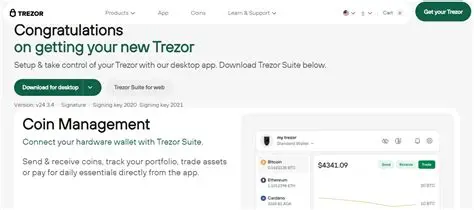
Trezor Login – Safe Access to Your Crypto Wallet Through Hardware Authentication
Cryptocurrency has grown from a niche financial experiment to a global digital asset class. While the market grows, so do digital threats — phishing attacks, exchange hacks, password leaks, and account takeovers. This is where hardware wallets like Trezor revolutionize crypto ownership. Instead of a standard online login portal, Trezor Login is based on physical authentication using the hardware device, ensuring nobody can access your crypto remotely.
Unlike traditional crypto exchanges or online wallets that depend on usernames, passwords, and centralized servers, Trezor allows users to access their digital assets locally and securely, through direct connection to their hardware wallet. This creates a login process that is virtually immune to remote hacking.
This guide provides a complete breakdown of how Trezor Login works, how to access your crypto safely, how to troubleshoot login issues, and how to secure your wallet like a professional.
🔹 What Is Trezor Login?
Trezor Login refers to the method of unlocking and accessing the wallet using the Trezor hardware device, not through a web-based login page. The authentication process occurs locally between the wallet owner and the hardware device, meaning:
No password database exists to leak
No online server contains your account
No hacker can attack a website to steal your credentials
The only way to log in to a Trezor wallet is to physically own the device, enter the correct PIN, and approve access using the device screen.
This architecture ensures that you — not an exchange or custodian — control your digital wealth.
🔹 Where Trezor Users Log In
There are only two official and secure interfaces used for accessing a Trezor wallet:
Login OptionPlatformSecurity LevelTrezor Suite Desktop ApplicationWindows / macOS / Linux★★★★★ (Recommended)Trezor Suite Web InterfaceBrowser: Chrome, Firefox, or Brave★★★★☆
Trezor does not support logging in via third-party sites, pop-up links, or unofficial apps.
🔹 Step-by-Step: How to Log In to Your Trezor Wallet
Whether you’re a beginner or an experienced investor, the login flow is simple and secure.
Step 1 — Connect Your Device
Plug your Trezor Model One or Trezor Model T into your computer using the USB cable.
Step 2 — Open Trezor Suite
Launch the desktop application or access the browser version.
Step 3 — Enter Your PIN
Your device will show a randomized number pattern.
Enter the PIN based on the position of numbers — this prevents keylogging attacks.
Step 4 — Enter Passphrase (Optional but Recommended)
If you have hidden wallets enabled, you will be asked to enter your passphrase.
The passphrase creates a secondary hidden wallet inside the device structure.
Step 5 — Access Granted
Once authenticated, Trezor Suite opens your portfolio where you can:
View balances
Send and receive crypto
Swap tokens
Track investment performance
Add and manage multiple accounts
The device will require a physical confirmation before any transaction is broadcast to the blockchain.
🔹 What Makes Trezor Login Different from Exchanges
Centralized platforms rely on online credentials. Trezor relies on local device ownership.
FeatureExchange LoginTrezor LoginAuthenticationEmail + PasswordPIN + HardwareRecoveryEmail resetRecovery SeedRisk of Remote AttackVery HighZeroControl of KeysCustodianUser owns keysCan platform freeze funds?YesNo
If you don’t own your private keys, you don’t fully own your crypto.
The Trezor login system puts ownership back in your hands.
🔹 How Trezor Login Protects Users From Hacks
Trezor uses security mechanisms specifically designed to counter advanced cyberattacks.
ThreatHow Trezor Login Neutralizes ItPhishingPhysical confirmation required on deviceKeyloggingPIN entered using randomized gridMalwareCannot sign transactions without deviceData breachesNo online database to hackSIM swappingNo SMS or phone login requiredFake login pagesNo web-based credential entry
Even if an attacker has full remote access to your computer, they cannot transfer your funds without the hardware wallet.
🔹 Advanced Login Security: The Passphrase Feature
Trezor allows users to strengthen the login process by creating a private passphrase-protected wallet.
Benefits of using a passphrase:
Creates a hidden wallet inside the device
No trace of wallet existence without the passphrase
Protects assets even if the recovery seed becomes known
Extra layer of defense for large portfolios
⚠️ Important: Trezor cannot restore the passphrase if forgotten.
The recovery seed + passphrase together generate the hidden wallet.
🔹 What You Don’t Need for Trezor Login
To avoid scams, remember that Trezor login never requires:
❌ Username
❌ Email
❌ Password
❌ SMS code
❌ Private key entry
❌ Recovery seed on a website
If any website asks for these to access a “Trezor account,” it is fraudulent.
🔹 Troubleshooting Trezor Login Problems
Below are common issues and solutions.
Device Not Detected
Try the following:
✔ Change USB cable
✔ Use a different USB port or computer
✔ Restart Trezor Suite
✔ Update firmware and Suite to the newest version
✔ Disable conflicting extensions (if using Web Suite)
Forgot PIN
Reset the device and restore using your recovery seed.
Forgot Passphrase
The hidden wallet cannot be recovered — you must know the exact phrase.
Browser Login Fails
Use Chrome, Firefox, or Brave
Enable WebUSB
Try the Desktop Suite instead (best reliability)
Bootloader Warning
This may happen after firmware update interruption.
Reconnect device and reinstall firmware through Suite.